Description:
Inventor:
Khalid Hanafy, MD, PhD – Professor of Neurology, Director, Center for Neuroinflammation, Director of Research, Cooper Neurologic Institute
Overview
A novel therapeutic approach for treating post-hemorrhagic inflammation through selective modulation of innate immune signaling pathways. The technology targets the TLR4-Lyn signaling axis to reduce harmful inflammatory responses while preserving beneficial immune function, creating a potential disease-modifying treatment for hemorrhage-associated neuroinflammation.
Clinical Need
Hemorrhagic conditions, including subarachnoid hemorrhage (SAH), trigger inflammatory cascades following red blood cell breakdown and release of heme into surrounding tissues. This inflammatory response contributes to secondary neurological injury, including cerebral edema, vasospasm, neuronal damage, and cognitive impairment. Current treatment approaches are primarily supportive and procedural, with no approved therapies directly targeting the underlying inflammatory mechanisms responsible for secondary injury.
Solution
The disclosed approach provides methods for treating post-hemorrhagic inflammation through administration of a small molecule agent that modulates key immune signaling pathways associated with heme-mediated inflammation. Compositions are formulated for systemic or localized delivery, including intravenous, intrathecal, parenteral, or direct central nervous system administration.
Technology
The treatment is based on modulation of inflammatory signaling in immune cells, particularly pathways activated in response to heme and red blood cell exposure following hemorrhage.
Preclinical studies demonstrate that activation of Lyn kinase (a regulator of immune signaling) attenuates inflammatory responses, reduces pro-inflammatory cytokine levels, and improves functional outcomes in animal models of hemorrhagic injury.
In these models, treatment was associated with reduced markers of inflammation (e.g., TNF-α, IFN-γ), increased activation of Lyn-related signaling pathways, and improved performance in cognitive and behavioral assessments. The approach supports modulation of macrophage and microglial activity, which play central roles in the inflammatory response following hemorrhagic injury.
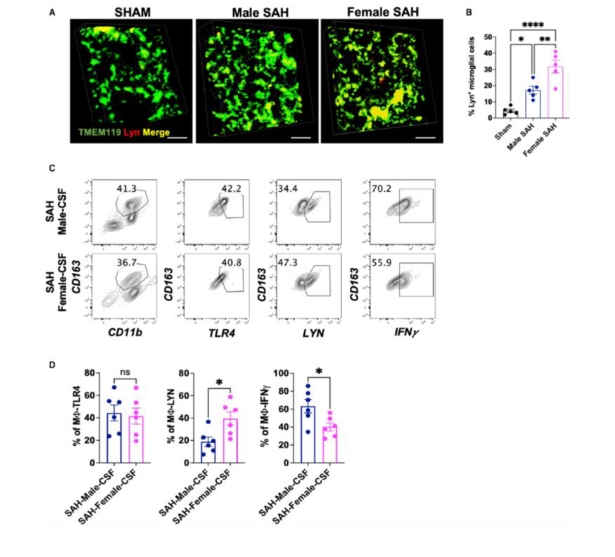
Figure 1. A 3D brain model exposed to Subarachnoid hemorrhage (SAH) patient and cerebral spinal fluid (CSF) myeloid analyses demonstrating Lyn-associated signaling activation within the TLR4 inflammatory pathway following injury.
Advantages
- Selectively reduces harmful inflammation while preserving beneficial immune function
- Addresses an unmet need in hemorrhage-associated neuroinflammation
- Targets the underlying disease mechanism rather than symptoms
- Supported by preclinical efficacy data
- Utilizes a small molecule with Phase II safety data in another indication, potentially accelerating clinical translation [25-0010 Ha...n_NCS_2026 | Word]
Development
Stage: Preclinical (In Vivo Proof of Concept)
IP: U.S. Provisional Patent Application Filed [25-0010 Ha...n_NCS_2026 | Word]
Opportunities
Co-development and licensing partnerships. [25-0010 Ha...n_NCS_2026 | Word]
Contact
Neal Lemon, PhD, MBA
AVP, Innovation & Technology Commercialization
Cooper University Health Care | Rowan University
lemon-neal@cooperhealth.edu | lemonna@rowan.edu